27 MAY 2026
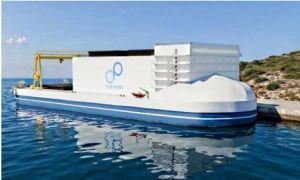
Greece’s utility sector has invested heavily in renewables in recent years, and now generates so much solar power that it faces a high rate of curtailment on sunny days. Its mainland grid has been a net exporter of electricity since 2024, benefiting its neighbors. But non-interconnected Greek islands – like many in the Cyclades and Dodecanese – retain a dependence upon diesel-fired generating stations, which require imported fuels. One option for “greening” their power grids could be miniature nuclear power plants, built on barges and towed into position, according to a new study by the Deon Policy Institute, ABS, Core Power and Athlos Energy.
Floating nuclear power could work well for a coastal state like Greece, Deon found. The power generating capacity can be installed near to areas of high demand, whether to replace oil-fired power plants, add grid-independent capacity for seaport electrification, or supply data centers with a dedicated power source. Since they are small and modular, they would slot in neatly to meet small-scale demand changes, and they could be moved around when needed by towing. Greece’s maritime industrial base and know-how also favor construction and operation of floating solutions.
Floating nuclear power is a mature technology with no technical hurdles remaining for implementation, Deon concluded. Regulatory work remains to be done, and public acceptance must be secured, but otherwise a floating nuclear plant could be in operation in Greece by 2035-40.